
Building Beyond Code: Lifeline Infrastructure and the Case for Coordinated Resilience
Executive Summary
Lifeline infrastructure systems, including electric power, water, communications, and transportation, are the backbone of modern communities. These systems are essential not only to daily life, but to public safety, economic continuity, and post-disaster recovery. As disruptive events become more frequent and more severe, reliance on minimum building code compliance alone is increasingly insufficient.
Federal agencies including FEMA and NIST have made clear that minimum codes are designed primarily to protect life during an event, not to ensure rapid restoration of essential services afterward. Building beyond code must therefore become the new baseline.
This white paper defines lifeline infrastructure and examines its role in community resilience, with steel conduit presented as a practical, readily available case study in resilient design. Steel conduit systems demonstrate how designers, owners, and policymakers can improve physical protection, fire performance, electromagnetic interference mitigation, lifecycle cost outcomes, and long-term adaptability using existing codes and standards. The paper also outlines how public policy, sustainability frameworks, and infrastructure investment can accelerate adoption of resilient lifeline strategies.
- Introduction: Defining Lifeline Infrastructure
Lifeline infrastructure refers to the critical physical systems that sustain communities, including electrical power, water and wastewater, telecommunications, and transportation networks. Buildings function as interconnected nodes within these systems. A failure in one lifeline can quickly cascade into others, magnifying disruption across entire regions.
Because of these interdependencies, resilience must be addressed not only within individual buildings, but at the interfaces where buildings connect to broader community infrastructure. Strengthening these connections is central to protecting public health and safety and enabling functional recovery after disruptive events.
- Beyond Code: The New Baseline for Resilience
Traditional building codes focus on preventing loss of life during discrete hazard events. While this objective remains critical, it does not address how quickly buildings and communities can return to service. FEMA has concluded that minimum codes alone are not sufficient to address modern disaster risks.
Resilient lifeline infrastructure design shifts the focus from minimum compliance to performance outcomes, including continuity of service and speed of recovery. This approach emphasizes durability, redundancy, and adaptability in critical systems. Retrofitting or upgrading lifeline connections with resilient solutions, such as steel conduit systems, improves reliability, reduces downtime, and enhances overall safety.
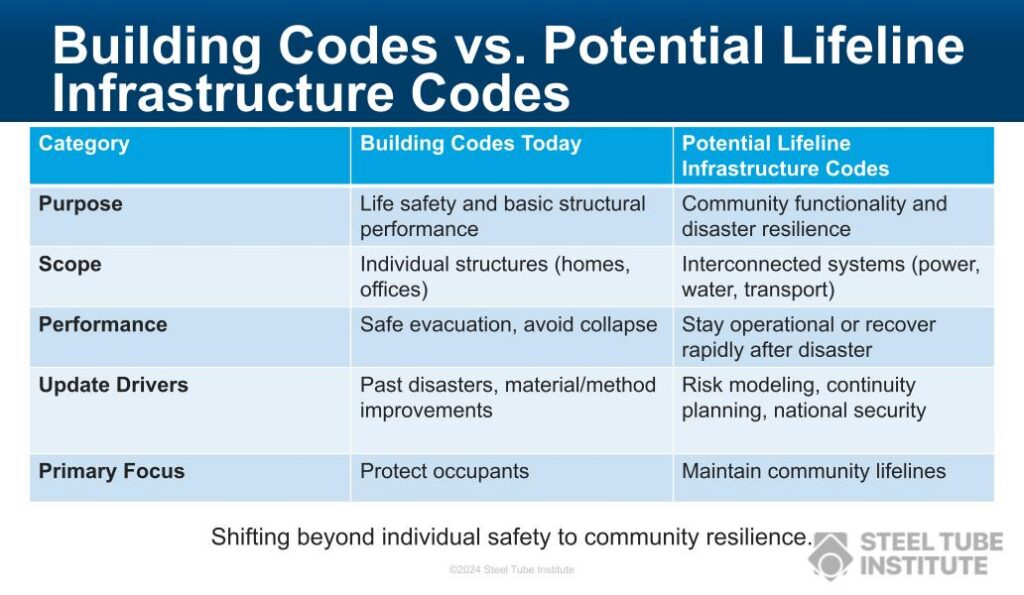
Figure 1. Building Codes versus Lifeline Infrastructure Codes. Conceptual comparison illustrating the shift from minimum life-safety objectives toward community-level functional recovery through resilient lifeline systems.
- Steel Conduit as a Case Study in Practical Resilience
Steel conduit systems, including electrical metallic tubing (EMT), intermediate metal conduit (IMC), and rigid metal conduit (RMC), provide a clear example of how building beyond code can be achieved using familiar, code-compliant materials.
3.1 Physical Protection and Future-Proofing
Steel conduit is the strongest electrical raceway in use and provides superior protection against crushing, impact, and penetration. This physical robustness is especially valuable in natural disasters, high-traffic environments, and facilities critical to public safety.
Steel conduit also supports future-proofing. Steel conduIt capacity allows for future conductor additions or removal and replacements. This allows electrical systems to be upgraded as technology evolves without demolition or extended downtime.
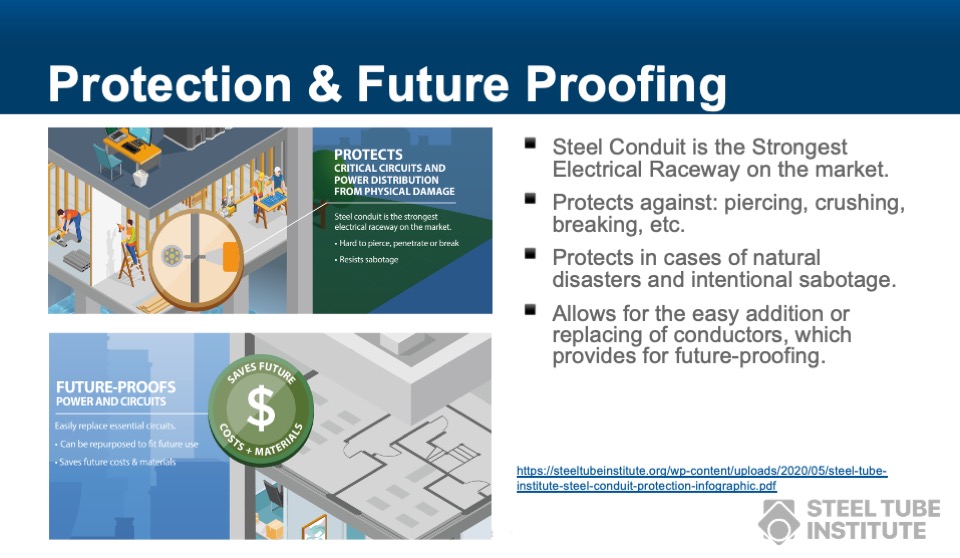
Figure 2. Physical Protection Provided by Steel Conduit. Steel conduit encloses and protects conductors from mechanical damage while allowing future system modifications.
3.2 Fire Safety Performance
Galvanized steel conduit systems are noncombustible and help maintain wiring integrity during fire events. Metallic raceways resist high temperatures, limit flame spread, and support the performance of fire-rated assemblies when penetrations are properly sealed. Steel conduit therefore contributes to both life safety and post-event system reliability.
3.3 Electromagnetic Interference Protection
Steel conduit provides inherent electromagnetic interference shielding by functioning as a continuous metallic enclosure. This characteristic is critical in environments with sensitive electronic equipment, including operating rooms, data centers, public safety facilities, and mission-critical communications spaces. Unlike supplemental shielding solutions, steel conduit provides durable, long-term EMI protection as part of the core electrical system.
3.4 Lifecycle Cost Performance
Although steel conduit may involve higher initial installation costs than some alternative wiring methods, lifecycle cost analyses consistently demonstrate long-term savings. A ten-year commercial building comparison of EMT versus MC cable shows total savings of approximately $33,700, driven by reduced labor, lower maintenance requirements, and minimized operational disruption.
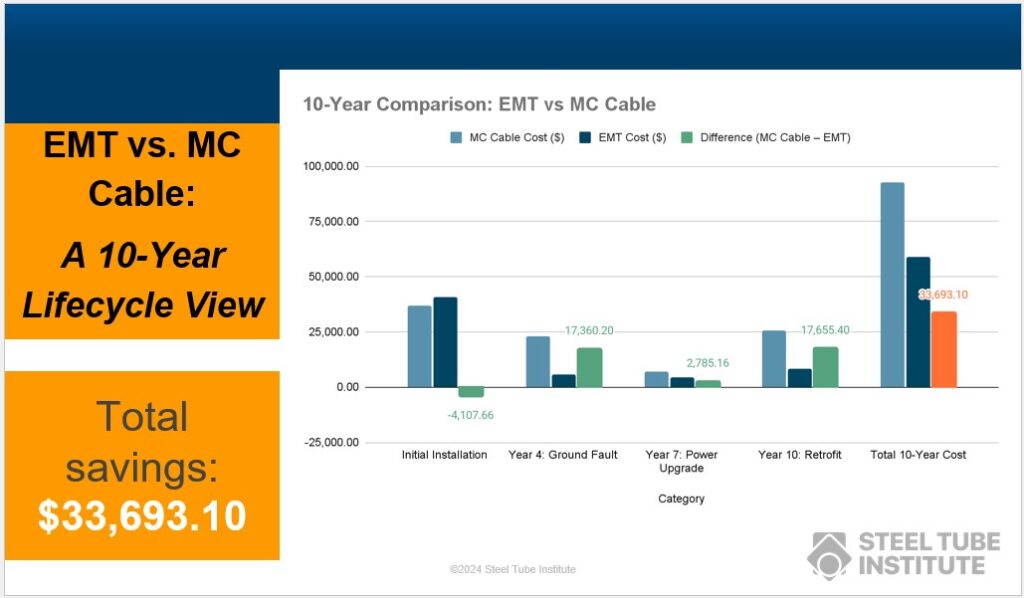
Figure 3. Ten-Year Lifecycle Cost Comparison: EMT versus MC Cable. Total installed, maintenance, and downtime costs over a ten-year period.
3.5 Real-World Retrofit Applications
Steel conduit has been successfully applied in retrofit projects across multiple critical sectors. In healthcare facilities, grounded steel conduit systems mitigate electromagnetic interference in operating rooms, protecting sensitive medical equipment. In public safety buildings, steel conduit provides durable wiring protection while accommodating future technology upgrades. In data centers, steel conduit systems have been used to form effective Faraday shielding, improving reliability and uptime.
- Connecting Buildings to Communities
Community resilience planning recognizes that buildings and infrastructure must be designed as integrated systems. The NIST Community Resilience Planning Guide emphasizes performance goals that address prevention, protection, mitigation, response, and recovery.
Steel conduit supports these goals by enhancing the durability and reliability of electrical lifeline connections in diverse environments, including coastal regions, industrial facilities, and areas subject to vibration or corrosion. By strengthening the physical links between buildings and utility systems, resilient raceway design helps reduce the risk of cascading failures.
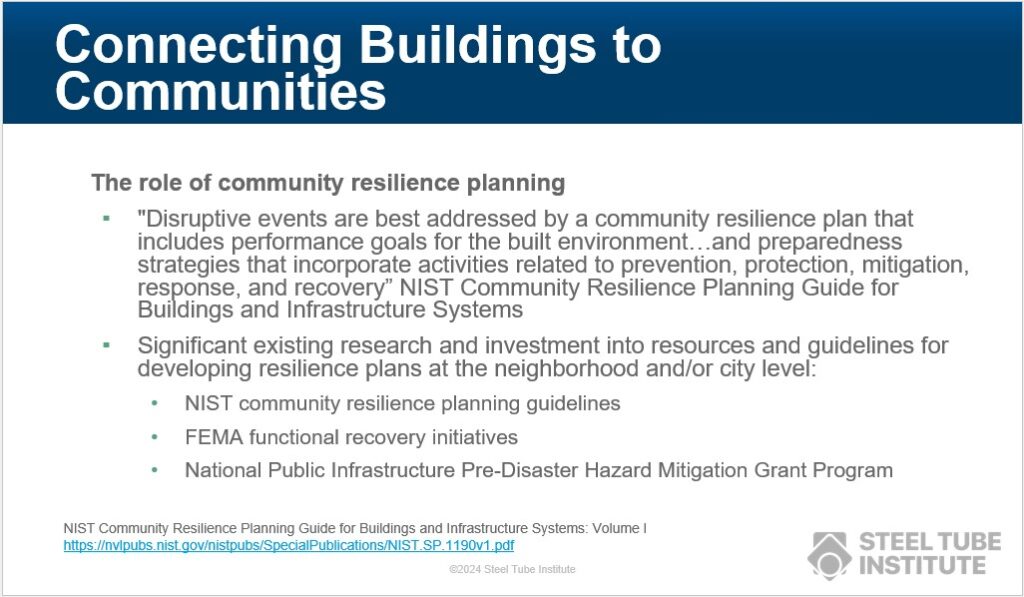
Figure 4. Community Resilience Planning Framework. Integration of building resilience, lifeline infrastructure, and community performance goals.
- Public Policy and Infrastructure Investment
Public policy plays a critical role in advancing resilient lifeline infrastructure. Federal research programs, grants, and hazard mitigation initiatives help offset the upfront costs of exceeding minimum standards and encourage adoption of higher-performance solutions.
Emerging tools such as digital twins allow designers and owners to simulate infrastructure performance before construction, identify potential failure points, and optimize resilient designs. Sustainability and procurement frameworks further align with resilient raceway systems. Steel conduit’s recycled content, recyclability, and long service life support green building objectives and long-term infrastructure value. Additionally, procurement of domestic steel conduit supports the regulations of the Buy America Act, Buy American Act, and Build America, Buy America (BABA).

Figure 5. Policy and Investment Drivers for Resilient Infrastructure. Alignment of federal priorities, sustainability frameworks, and resilience outcomes.
- Conclusions
Lifeline infrastructure is foundational to community resilience, and buildings must be designed with an understanding of their role within interconnected systems. Minimum code compliance alone does not ensure functional recovery or continuity of essential services.
Steel conduit provides a practical, proven model for building beyond code. Its physical strength, fire performance, electromagnetic interference protection, adaptability, and lifecycle cost advantages demonstrate how resilient lifeline infrastructure can be implemented today. Aligning technical design, public policy, and investment priorities will be essential to strengthening communities against future disruptions.
References
National Electrical Code.
UL 6, UL 1242, UL 797 Standards.
FEMA, Building Codes Save: A Nationwide Study.
NIST, Community Resilience Planning Guide for Buildings and Infrastructure Systems.
Steel Tube Institute Technical Resources.